


Page 34 - Cape-Camera-January-February-2021
P. 34
January/February 2021                                                                                                                                                    Cape Camera


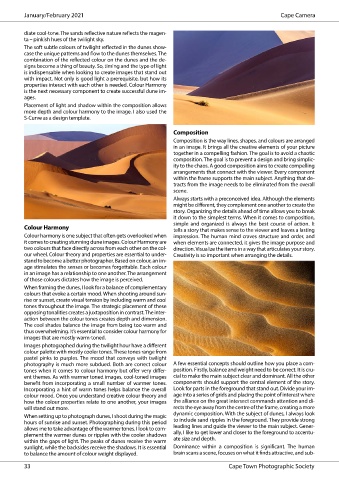
          diate cool-tone. The sands reflective nature reflects the magen-
          ta – pinkish hues of the twilight sky.
          The soft subtle colours of twilight reflected in the dunes show-
          case the unique patterns and flow to the dunes themselves. The
          combination of the reflected colour on the dunes and the de-
          signs become a thing of beauty. So, timing and the type of light
          is indispensable when looking to create images that stand out
          with impact. Not only is good light a prerequisite, but how its
          properties interact with each other is needed. Colour Harmony
          is the next necessary component to create successful dune im-
          ages.
          Placement of light and shadow within the composition allows
          more depth and colour harmony to the image. I also used the
          S-Curve as a design template.

                                                              Composition
                                                              Composition is the way lines, shapes, and colours are arranged
                                                              in an image. It brings all the creative elements of your picture
                                                              together in a compelling fashion. The goal is to avoid a chaotic
                                                              composition. The goal is to prevent a design and bring simplic-
                                                              ity to the chaos. A good composition aims to create compelling
                                                              arrangements that connect with the viewer. Every component
                                                              within the frame supports the main subject. Anything that de-
                                                              tracts from the image needs to be eliminated from the overall
                                                              scene.
                                                              Always starts with a preconceived idea. Although the elements
                                                              might be different, they complement one another to create the
                                                              story. Organizing the details ahead of time allows you to break
                                                              it down to the simplest terms. When it comes to composition,
                                                              simple and organized is always the  best  course of  action. It
          Colour Harmony                                      tells a story that makes sense to the viewer and leaves a lasting
          Colour harmony is one subject that often gets overlooked when   impression. The human mind craves structure and order, and
          it comes to creating stunning dune images. Colour Harmony are   when elements are connected, it gives the image purpose and
          two colours that face directly across from each other on the col-  direction. Visualize the items in a way that articulates your story.
          our wheel. Colour theory and properties are essential to under-  Creativity is so important when arranging the details.
          stand to become a better photographer. Based on colour, an im-
          age stimulates the senses or becomes forgettable. Each colour
          in an image has a relationship to one another. The arrangement
          of those colours dictates how the image is perceived.
          When framing the dunes, I look for a balance of complementary
          colours that evoke a certain mood. When shooting around sun-
          rise or sunset, create visual tension by including warm and cool
          tones throughout the image. The strategic placement of these
          opposing tonalities creates a juxtaposition in contrast. The inter-
          action between the colour tones creates depth and dimension.
          The cool shades balance the image from being too warm and
          thus overwhelming. It’s essential to consider colour harmony for
          images that are mostly warm-toned.
          Images photographed during the twilight hour have a different
          colour palette with mostly cooler tones. These tones range from
          pastel pinks to purples. The mood that conveys with twilight
          photography is much more subdued. Both are correct colour   A few essential concepts should outline how you place a com-
          tones when it comes to colour harmony but offer very differ-  position. Firstly, balance and weight need to be correct. It is cru-
          ent themes. As with warmer toned images, cool-toned images   cial to make the main subject clear and dominant. All the other
          benefit from incorporating a small number of warmer tones.   components should support the central element of the story.
          Incorporating a hint of warm tones helps balance the overall   Look for parts in the foreground that stand out. Divide your im-
          colour mood. Once you understand creative colour theory and   age into a series of grids and placing the point of interest where
          how the colour properties relate to one another, your images   the alliance on the great intersect commands attention and di-
          will stand out more.                                rects the eye away from the centre of the frame, creating a more
          When setting up to photograph dunes, I shoot during the magic   dynamic composition. With the subject of dunes, I always look
          hours of sunrise and sunset. Photographing during this period   to include sand ripples in the foreground. They provide strong
          allows me to take advantage of the warmer tones. I look to com-  leading lines and guide the viewer to the main subject. Gener-
          plement the warmer dunes or ripples with the cooler shadows   ally, I like to get lower and closer to the foreground to accentu-
          within the gaps of light. The peaks of dunes receive the warm   ate size and depth.
          sunlight, while the backsides receive the shadows. It is essential   Dominance within a composition is significant.  The human
          to balance the amount of colour weight displayed.   brain scans a scene, focuses on what it finds attractive, and sub-
          33                                                                     Cape Town Photographic Society

